
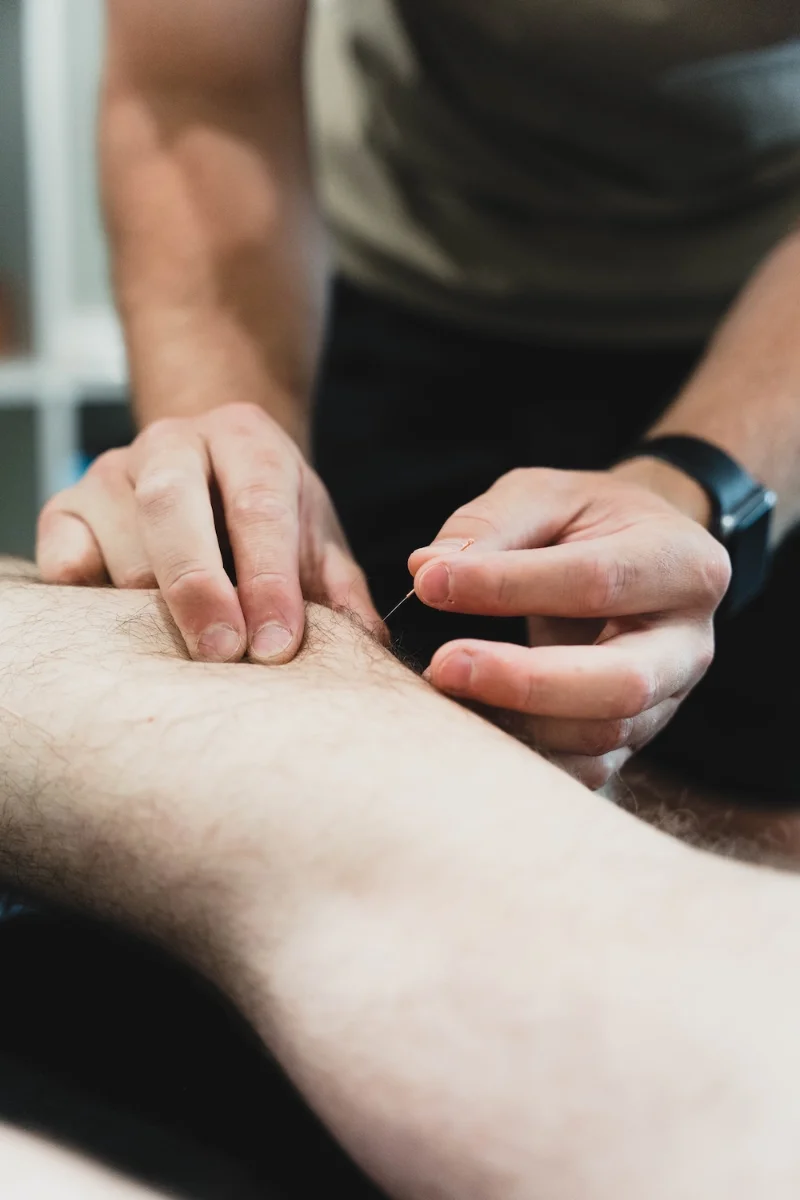
What it is
Dry needling involves inserting fine, sterile, single-use needles into specific points in a muscle to help reduce tension and pain. It is different from acupuncture and is grounded in an understanding of the muscles and nervous system.
When we use it
Some of our physiotherapists use dry needling as one option within a broader plan, where it suits your presentation and you are comfortable with it. It is never used in isolation - it supports the active parts of your rehabilitation.
Benefits
- May help reduce muscle tension and local pain
- Can improve comfort with movement
- Used alongside exercise and hands-on treatment
- Fine, single-use, sterile needles
What to expect
- A discussion of whether it is appropriate and consent before treatment
- A clear explanation of the sensation to expect
- Only clinicians trained in the technique performing it
- Integration with the rest of your plan
Related: Dry Needling service →

Chloe Wedd
Physiotherapist at The Physio Studio, Goodwood, and a member of the Australian Physiotherapy Association. Chloe focuses on injury recovery, pain management and helping people return to the activities they enjoy, using dry needling alongside hands-on treatment and tailored exercise rather than in isolation. A keen runner, cyclist and swimmer herself, she understands how muscle pain and tightness interrupt training consistency and what it takes to get back to it.
Frequently asked questions
Is dry needling the same as acupuncture?
No. Both use fine needles, but dry needling is based on modern anatomy and muscle physiology rather than traditional acupuncture theory.
Does everyone need dry needling?
Not at all. It is one optional tool. Your physiotherapist will only suggest it if it suits your presentation and you are comfortable to try it.