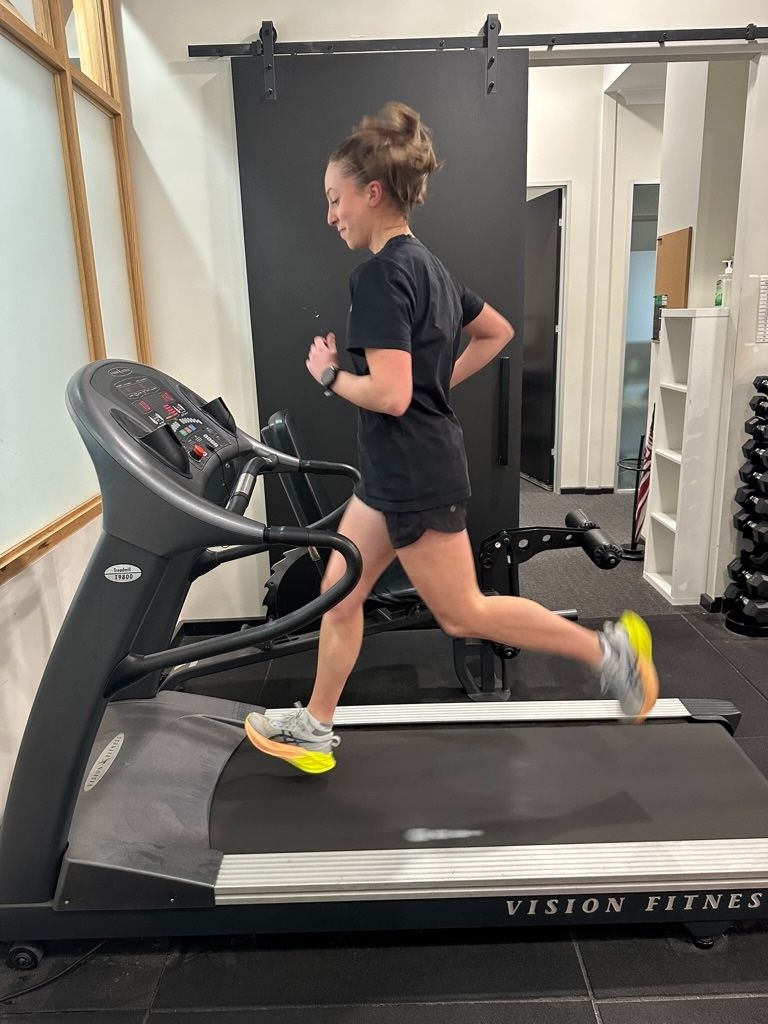

If you have pain in one specific spot on a bone that is getting worse with running, aches after you stop, or wakes you at night, it could be a bone stress injury (BSI). Unlike many running niggles, a suspected BSI is not one to run through: stop impact running and get it assessed early. Caught at the early “stress response” stage, most BSIs settle well with a short break from running.
Whether you’re training for your first 5 km or chasing a marathon PB, knowing the early warning signs of a bone stress injury can make the difference between a short break from running and months on the sidelines.
What is a bone stress injury?
Bone is constantly breaking down and rebuilding in response to load. A bone stress injury happens when the load placed on a bone is greater than its ability to repair and adapt, so bone breaks down faster than it is rebuilt.
BSIs sit on a spectrum:
- Stress response: the early stage. There is swelling (bone marrow oedema) and increased blood flow within the bone, but the bone’s structure is still intact and there is no fracture line.
- Stress fracture: the later stage. Structural breakdown has occurred, leaving a fracture line that can be seen on a scan.
Catching a BSI in the stress response stage is key to stopping it progressing to a fracture. At this stage, a period of reduced loading usually leads to a faster, less complicated recovery.
What does a bone stress injury feel like?
- Pain in a specific spot on the bone, often one you can point to with one finger
- A dull ache that increases with weight-bearing
- Sharper pain with impact, such as running or jumping
- Pain that at first only appears with exercise, but progresses to everyday activities such as walking
- Aching at night or at rest
Pain that is steadily worsening, becoming more constant or starting to wake you at night is a strong sign that you should stop “running through it” and get it assessed.
Where do bone stress injuries happen in runners?
BSIs can occur anywhere in the body, but they are far more common in the lower limb because of the repetitive impact of running. The most common sites include:
- Metatarsals (the long bones of the foot)
- Tibia (shin bone): see shin splints or a stress fracture?
- Fibula, navicular (a midfoot bone) and calcaneus (heel bone)
- Femur (thigh bone)
- Pelvis and sacrum
High-risk sites
Some sites are considered high risk because they have a poorer blood supply or are under higher stress. They heal more slowly and are more likely to progress to a complete fracture. These include the femoral neck (hip), the front of the tibia, the navicular and the base of the fifth metatarsal. BSIs at these sites need a more cautious, closely monitored return to load.
What causes a bone stress injury?
BSIs usually result from a combination of factors. They are most often seen after a sudden increase in training: a jump in weekly distance, the introduction of speed or hill sessions, or a rapid return to running after time off. But load isn’t the only factor. Even runners who progress their training sensibly can develop a BSI if their bone health is affected by other factors.
Risk factors for BSI
- A previous bone stress injury, one of the strongest predictors
- Sudden increases in training load
- Not eating enough to fuel your training (low energy availability, sometimes called RED-S). This can affect men as well as women
- Irregular or missed periods, especially missing three or more in a row
- Low vitamin D or calcium
- Low bone density
- Female sex
- Reduced muscle mass or strength
- High running volumes or a lot of jumping
If you think you may not be eating enough for the training you’re doing, or your periods have become irregular or stopped, it’s worth talking to your GP. Our team can also connect you with a sports doctor or dietitian.
Concerned about a possible bone stress injury? An early assessment can help work out whether you need a scan and how to change your training.
Book an assessment →How is a bone stress injury diagnosed?
We start with a detailed history of your training, recent changes and general health, and combine it with a hands-on examination and some simple clinical tests to judge how likely a BSI is. Please don’t test a sore leg by hopping on it at home.
A scan confirms the diagnosis. X-rays are often normal in the early stages, so a clear X-ray doesn’t rule out a BSI. MRI is the most reliable scan: as well as confirming the injury, it shows how advanced it is, which helps us estimate how long recovery will take.
How are bone stress injuries treated?
The first step is reducing or stopping running for a period, so the bone can repair without breaking down further. How much depends on the severity and site of the injury. For some people this simply means cutting out running and jumping. For others, it means a period in a walking boot or on crutches.
Most people can keep up their fitness with activities that don’t reproduce their pain, such as cycling, swimming or pool running.
The good news is that the vast majority of BSIs recover well with this approach: an initial period of reduced loading, followed by a structured, progressive return to training. In rarer cases, such as a fracture that isn’t healing or has shifted out of place, surgery may be needed.
Effective treatment also goes beyond resting the bone. Addressing the underlying factors, including training load, nutrition, hormonal health and strength, is essential to reduce the risk of it happening again. This often involves a team approach with your physiotherapist, a sports doctor, a dietitian and a strength and conditioning coach.
How long until I can run again after a bone stress injury?
As a general guide:
- Lower-risk sites caught early: often 6–12 weeks to return to running
- High-risk sites or established fractures: often 3–6 months or more
Your timeframe depends on the site, how advanced the injury is on MRI and how quickly the contributing factors are addressed.
Before returning to running, you should be able to
- Walk briskly for 30 minutes or more without pain
- Press on the injured area without tenderness
- Hop on the injured leg without pain
- Then follow a graded walk–run program, building volume gradually before adding speed or hills
Our guide to returning to running after time off has more on building back up safely.
I think I have a bone stress injury. Who should I see first?
A physiotherapist is a great first point of call. We can assess how likely a BSI is and guide your next steps: referral for an MRI, a review with Dr Duncan Walker, our on-site Sports and Exercise Physician, input from a dietitian or other members of the healthcare team, and a plan to get you back to running safely and sustainably. Having a sports physician on site means scans and medical review can be arranged quickly when they are needed.
Frequently asked questions
Can I keep running with a stress reaction?
No. Unlike many running niggles, a suspected bone stress injury shouldn’t be run through. Stop impact running and get it assessed. Cycling or swimming are usually fine if they don’t hurt.
Will an X-ray show a stress fracture?
Often not in the early stages. A normal X-ray doesn’t rule out a bone stress injury. MRI is the most reliable scan.
How long does a stress fracture take to heal?
Lower-risk sites caught early often allow a return to running in 6–12 weeks. High-risk sites and established fractures often take 3–6 months or more.
Is it shin splints or a stress fracture?
Shin splints usually cause tenderness spread along 5 cm or more of the inner shin. A stress fracture usually causes pain in one spot that worsens with each run and may ache at rest or at night.
Can men get RED-S?
Yes. Not eating enough to fuel training affects bone health in men as well as women, and it is an important risk factor for bone stress injuries in both.

Chloe Wedd, Physiotherapist
Chloe is a physiotherapist at The Physio Studio with a special interest in running, cycling and swimming injuries. A keen runner and triathlete, she is a member of Run As One and is currently training for Ironman 70.3 Geelong, so she understands first-hand what it takes to keep training consistently while managing a niggle.
This article is general information and not a substitute for individual advice. Published 25 November 2026. Clinically reviewed November 2026 by the physiotherapy team at The Physio Studio.
More for runners: Running injuries · Running assessments · Sports physiotherapy