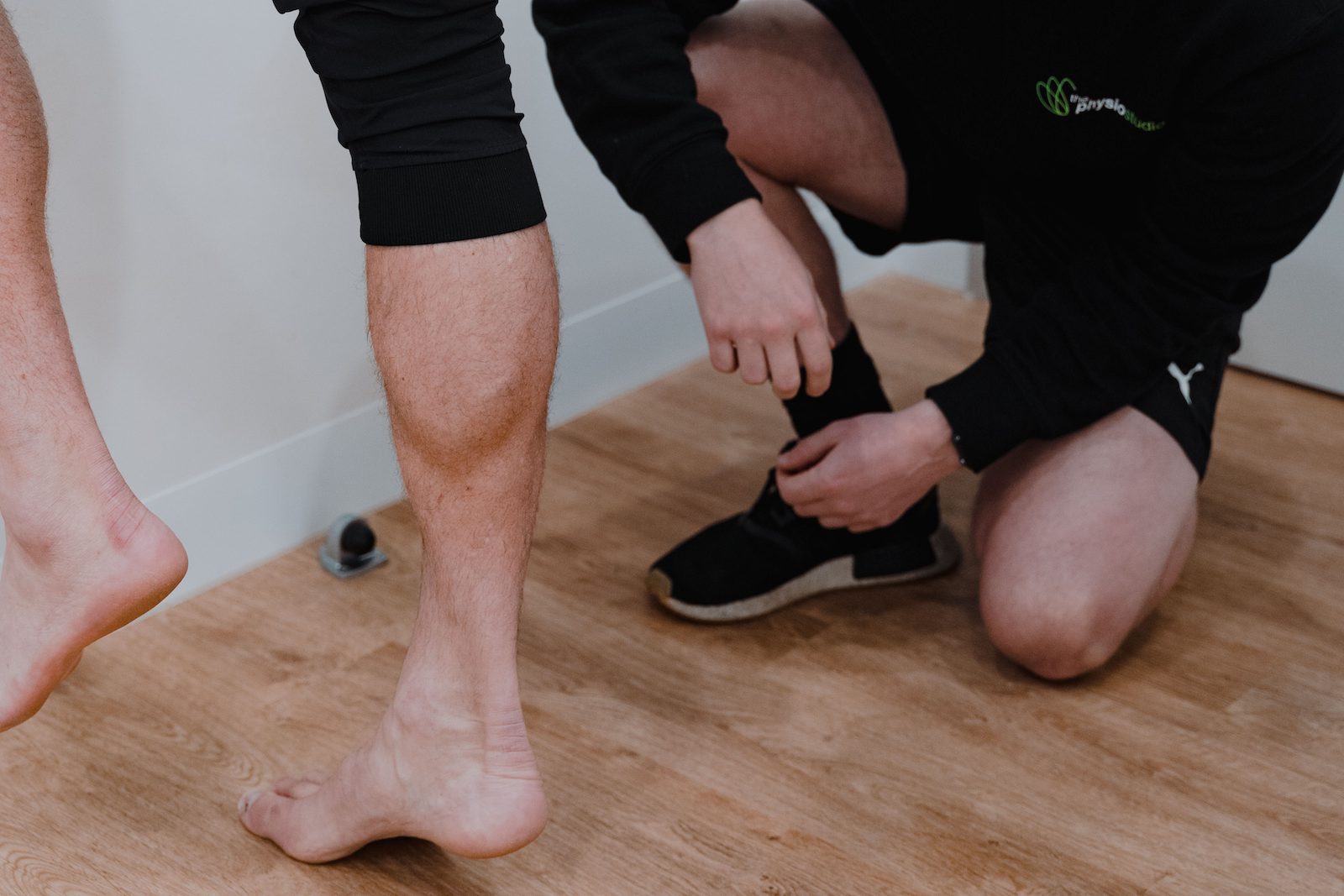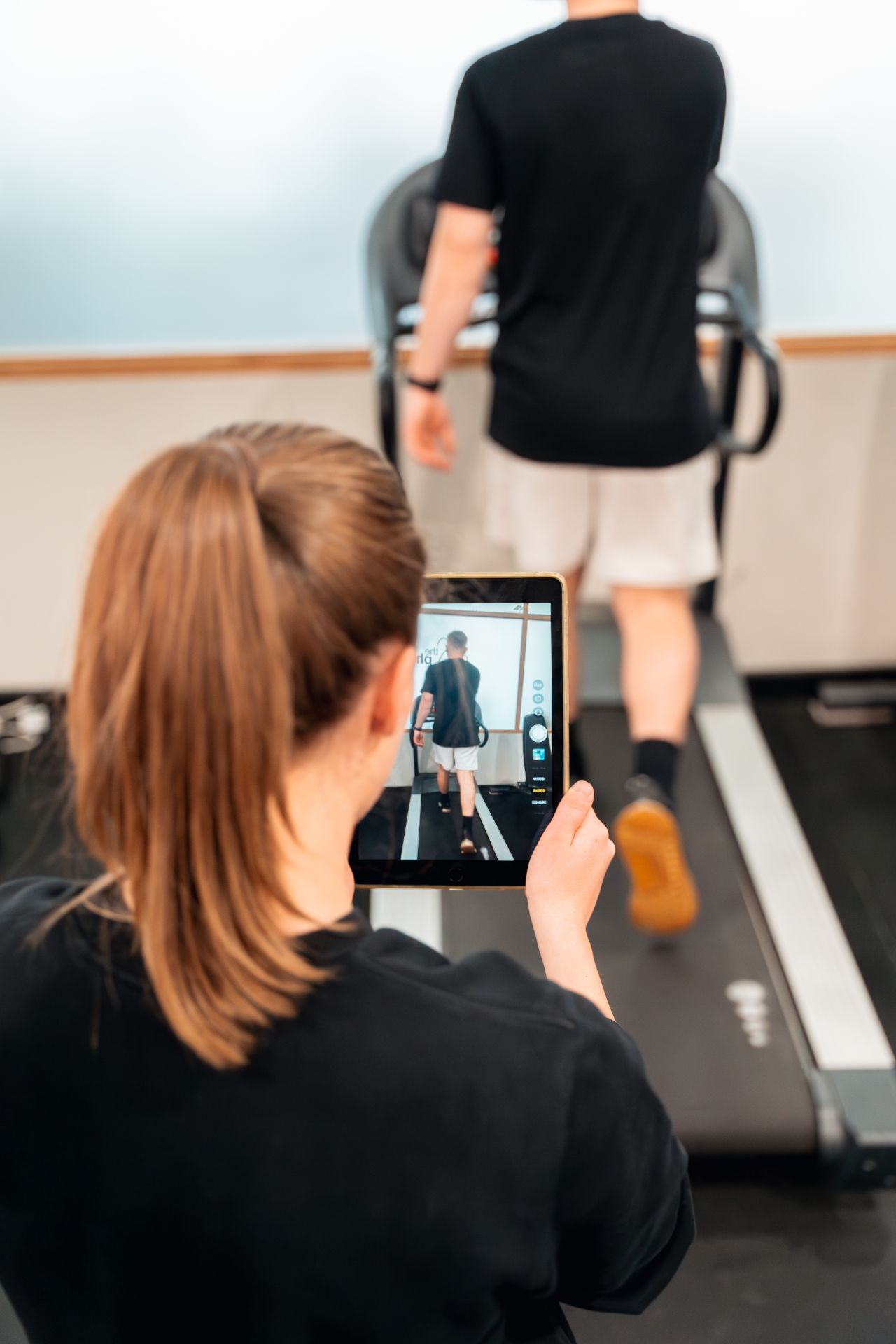
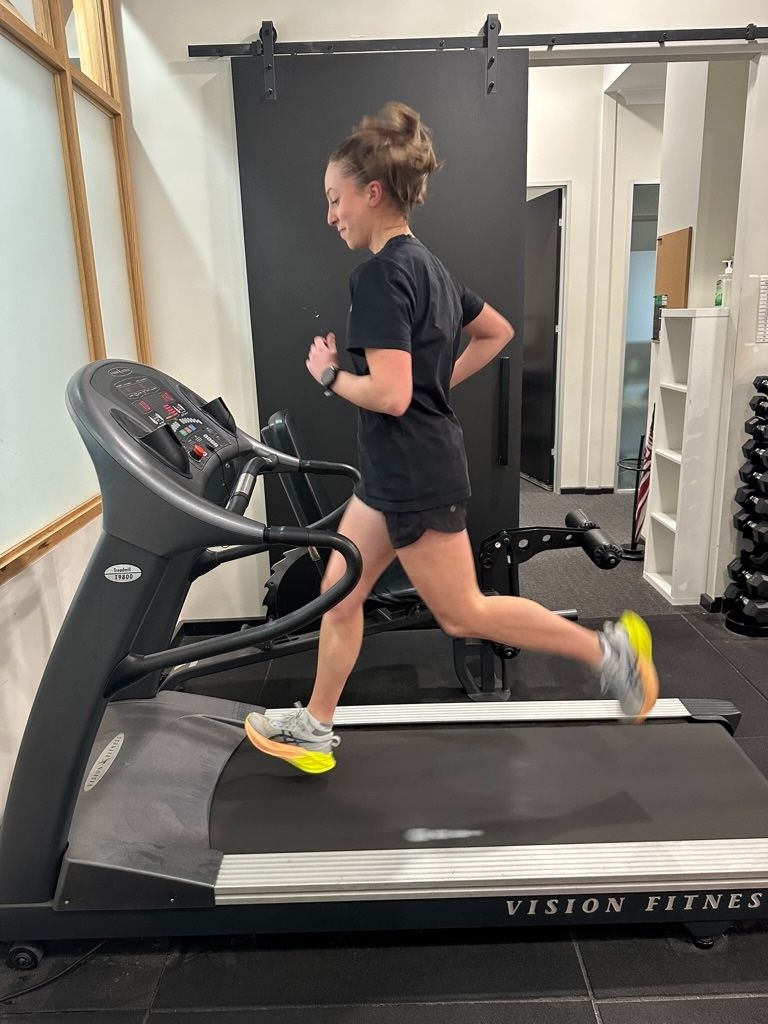
It depends on how badly the muscle is strained and which calf muscle is involved. As a rough guide, most runners are back running within 1–3 weeks after a mild (grade 1) strain, 3–8 weeks after a moderate (grade 2) strain and 2–4 months or more after a severe (grade 3) tear. Soleus strains often take longer than they feel like they should. Rather than counting weeks, the best guide is passing a few simple strength and hopping tests, which are listed below.
Calf strains are one of the most common muscle injuries we see in runners. How quickly you get back depends on the severity of the strain, which part of the calf is injured, how it is managed in the first few days and individual factors such as your training load.
What is a calf strain?
A calf strain is an over-stretch or tear of the muscles at the back of the lower leg. The calf is made up of two main muscles, the gastrocnemius and the soleus, which join to form the Achilles tendon.
The gastrocnemius is injured more often. It crosses both the knee and the ankle, so it is most vulnerable when it is stretched at both joints at once: straightening your knee while your foot is pulled up towards your shin, as happens when you push off or accelerate.
Gastrocnemius or soleus: which one have I strained?
Sudden strain (usually gastrocnemius)
A sudden, sharp pain in the upper or inner calf, often during push-off, a sprint or a change of direction. Some people describe it as feeling like being hit in the calf. It is sometimes called “tennis leg”.
Gradual overload (more often soleus)
A tightness or ache deeper and lower in the calf that builds during or after a run, often after an increase in running volume or intensity. Many runners can keep going at first, which is why soleus strains are often underestimated. They are usually more painful with a bent-knee calf raise, and they often take longer to recover than the symptoms suggest.
Strains that involve the tendon tissue running through the middle of the muscle also tend to take longer than the grade alone would suggest. This is one reason an assessment is useful early on.
What increases my risk of a calf strain?
- A previous calf strain, the strongest risk factor, or other lower-limb muscle strains such as hamstring strains
- Being an older or masters-age runner
- A sudden increase in training load, especially speed work or hills
- Fatigue, such as the later stages of a long run
- A change in footwear, particularly to a lower-drop or racing shoe
- Reduced calf strength or endurance
- Aspects of running technique, which a running assessment can identify
How severe is my calf strain?
Calf strains are graded from 1 (mild) to 3 (severe), based on how many muscle fibres are disrupted and how much function you have lost. The grade guides your recovery timeframe.
| Grade | What it usually feels like | Typical return to running |
|---|---|---|
| 1, mild | Tightness or pain, walking is fairly normal, little loss of strength | 1–3 weeks |
| 2, moderate | Clear pain and weakness, limping, calf raises are painful | 3–8 weeks |
| 3, severe | Severe pain and major loss of function, may be unable to rise onto your toes | 2–4 months or more |
Timeframes are a general guide only. Soleus strains, strains involving tendon tissue and repeat strains often sit at the longer end. A scan is not usually needed, but it can help with severe or recurrent strains.
What should I do in the first few days?
In the first 24–72 hours the aim is to protect the injured muscle while keeping it moving gently.
- Stop running and jumping to avoid further damage
- Keep walking as comfort allows. Shorter steps help, and a small heel raise in your shoe can ease pain early on
- Compression and elevation can help to reduce swelling
- Avoid aggressive stretching or deep massage in the first few days
- Start gentle calf raise holds, pushing up only as far as is comfortable, to begin loading the muscle (depending on the grade)
How do I rebuild my calf strength?
Rehab progresses as your calf tolerates more load. A typical progression is:
- Holds: calf raise holds at a comfortable effort
- Double-leg, then single-leg calf raises through full range
- Adding weight, using both straight-knee raises (gastrocnemius) and bent-knee raises (soleus)
- Elastic, springy work such as skipping and hopping, to prepare the calf for running
Strained your calf? Our sports physios can work out how severe it is and give you a clear, staged plan back to running.
Book an assessment →When can I start running again?
Many runners can start light jogging earlier than they expect, once their calf passes the checks below. Running before the calf is ready is one of the most common reasons a calf strain drags on.
Checklist before returning to running
- Pain-free walking, including brisk walking and stairs
- 25–30 single-leg calf raises through full range, without pain, and close to your other leg
- Pain-free single-leg bent-knee calf raises. The straight-knee test mainly checks the gastrocnemius, so a soleus strain can pass it and still flare up
- Pain-free hopping on the injured leg
Meeting these benchmarks gives a much clearer picture of your calf’s readiness than the number of weeks since the injury.
How should I return to running?
- Start with walk–run intervals on flat ground, for example one minute jogging and one minute walking
- Run every second day at first, and build up time before you add pace
- Leave hills and speed work until last
- Keep early runs short. Calf strains often happen late in a run, when the muscle is tired
- Keep doing your calf strength work two to three times a week, even once you are back to full training
Why does my calf strain keep coming back?
Calf strains have a high rate of re-injury. The usual reasons are returning to running before strength has fully recovered, jumping straight back into speed work or high volume, and not continuing calf strengthening once the pain has gone. The calf and Achilles work closely together, so ongoing calf weakness can also lead to Achilles pain. If your calf keeps going, a running assessment can help find out why.
I’ve strained my calf. Who should I see first?
A physiotherapist can determine the grade of your strain and which muscle is involved, identify what contributed to it and guide you through each stage of a structured rehab program. If needed, we can arrange imaging or a review with Dr Duncan Walker, our on-site Sports and Exercise Physician, and plan your return to running in a way that reduces the chance of it happening again.
Frequently asked questions
Should I stretch a strained calf?
Not aggressively in the first few days, as it can aggravate the injured fibres. Gentle movement is fine, and rebuilding strength matters far more than stretching for a full recovery.
Can I run with a calf strain?
Running in the first few days usually makes a calf strain worse. Once you can walk without pain, do 25–30 single-leg calf raises (straight and bent-knee) and hop without pain, a gradual walk–run return is usually safe.
Do I need a scan for a calf strain?
Usually not. A clinical assessment is generally enough to grade the strain and guide rehab. A scan can help with severe, recurrent or slow-to-improve strains.
Is it a calf strain or my Achilles?
Calf strains are felt in the muscle, in the middle or upper part of the calf. Achilles problems are felt in the tendon just above the heel. A sudden pop or kicked feeling near the heel needs same-day assessment for a possible Achilles rupture.
How do I stop my calf strain coming back?
Return to running based on strength tests rather than time, progress hills and speed work last, and keep doing calf strengthening two to three times a week.
Scott Palmer, Titled APA Sports & Exercise Physiotherapist
Scott is the Director of The Physio Studio in Goodwood, with a Master of Sports Physiotherapy from La Trobe University and more than 25 years’ experience in elite and community sport. A runner, cyclist and 5× IRONMAN finisher, he works with runners of all levels, from first-time parkrunners to marathon and endurance athletes.
This article is general information and not a substitute for individual advice. Published 25 November 2026. Clinically reviewed November 2026 by the physiotherapy team at The Physio Studio.
More for runners: Running injuries · Running assessments · Sports physiotherapy