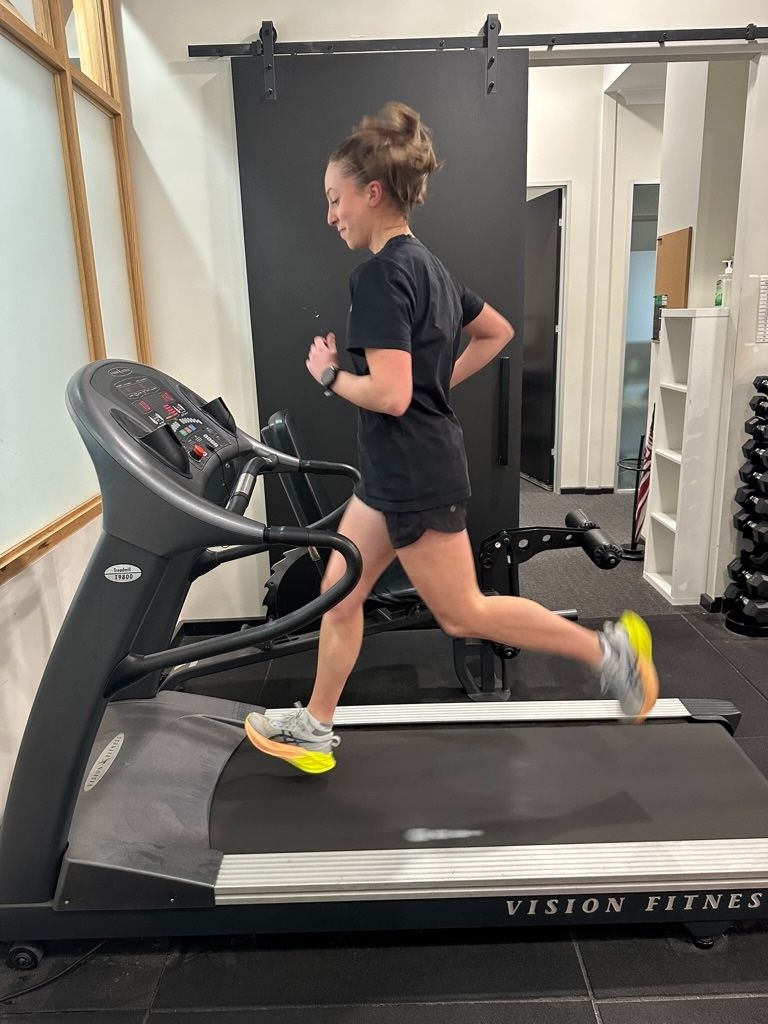
Often, yes. Most runners with Achilles tendinopathy can keep running in some form while the tendon recovers, provided that pain stays at or below 3–4 out of 10 during the run, doesn’t build as the run goes on, and settles within 24 hours, with no extra stiffness the next morning. Complete rest rarely helps a tendon. If your pain breaks these rules, reduce your running rather than stopping everything, and start strengthening.
Achilles pain is one of the most common reasons runners come to see us. The good news is that most people don’t need to stop running altogether. The key is knowing how your tendon is responding, and adjusting your training before it gets worse.
Also see your GP if your Achilles pain started after a course of certain antibiotics (fluoroquinolones such as ciprofloxacin), if both Achilles became painful at the same time for no obvious reason, or if other joints are also swollen.
What are the signs of Achilles tendinopathy?
- Pain or stiffness on your first steps in the morning or after sitting
- Aching at the back of the heel or lower calf
- A tender, sometimes thickened or swollen tendon
- Pain that eases once you’ve warmed up, then returns after the run
This warm-up effect is a well-recognised feature of tendon pain, but it can be misleading. Pain settling mid-run doesn’t necessarily mean the tendon is coping with the load. That is why it matters to monitor how it feels after the run and the next morning.
Where is your pain? Midportion vs insertional Achilles pain
Where your pain is located changes how it should be managed. It is also a common reason that generic exercises found online don’t work.
Midportion Achilles tendinopathy
Pain and tenderness about 2–6 cm above the heel, often with some thickening of the tendon. This is the most common type in runners, and it responds well to progressive strengthening.
Insertional Achilles tendinopathy
Pain right where the tendon attaches to the heel bone. Exercises and positions that stretch the tendon over the heel, such as heel drops off a step or calf stretching, often aggravate it. A small heel lift can help in the short term, and rehab exercises are usually kept on flat ground at first.
Is it Achilles tendinitis or tendinopathy?
You may hear the term “tendinitis”, but it suggests an inflammatory problem, which is not how we understand most tendon pain today. Instead, Achilles pain sits on a continuum: from a reactive tendon, which is recently overloaded and irritable, through to a long-standing or degenerative tendon that has been sore for months. Where you sit on this continuum guides how hard we load the tendon and how long recovery is likely to take.
What causes Achilles pain in runners?
Achilles tendinopathy usually develops when the load on the tendon exceeds what it can currently tolerate. Tendon capacity is affected by training (how much, how fast, how often) as well as by individual factors such as age and previous injury.
- Sudden increases in load: weekly distance, intensity, or adding hills or speed intervals
- Footwear changes: switching to a lower-drop, more minimal or racing shoe increases the load on the calf and Achilles
- Reduced calf strength or endurance
- A previous Achilles or calf injury (see our guide to calf strains)
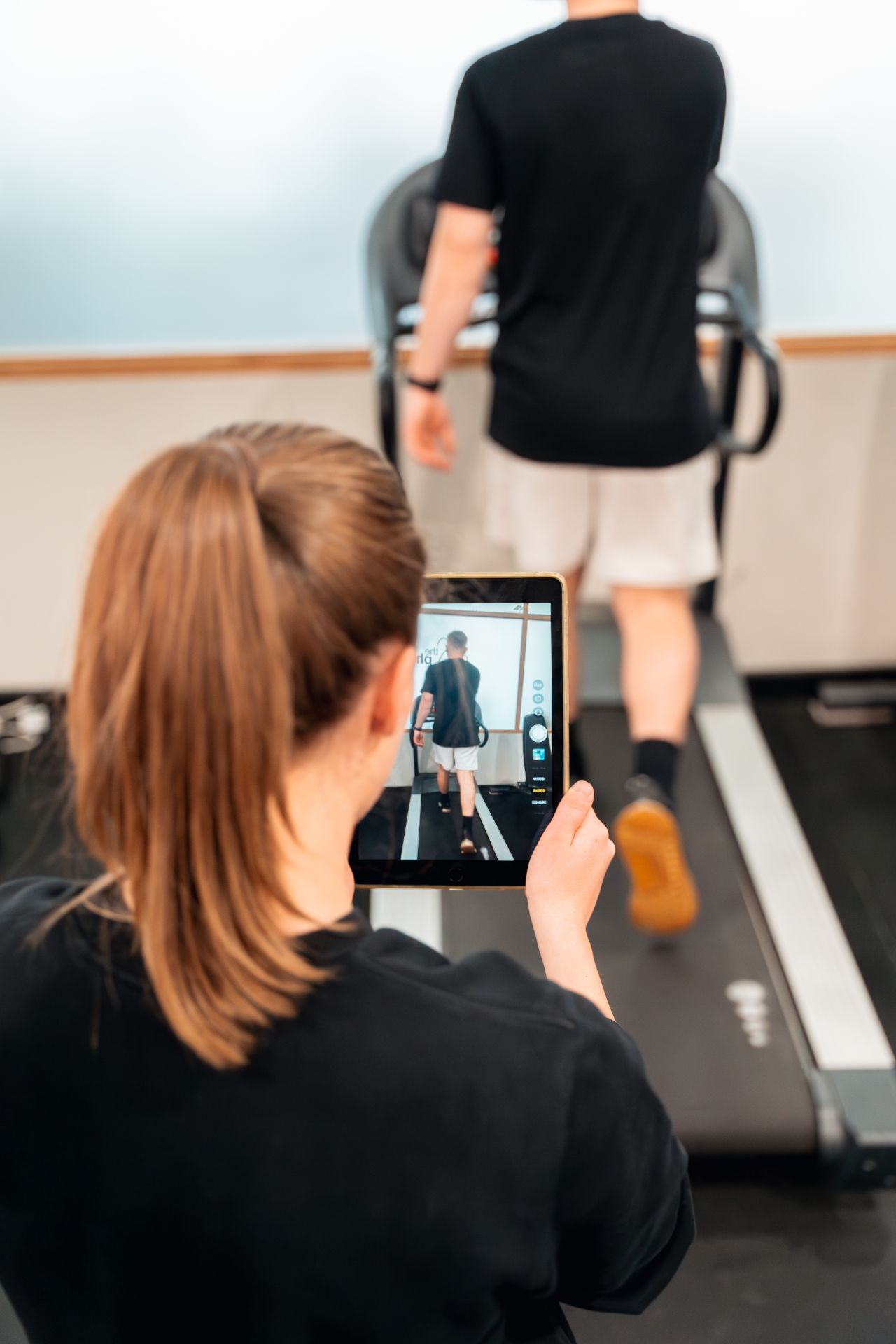
- Running technique factors, which a running assessment can identify
Can I keep running with Achilles pain?
In most cases complete rest isn’t needed. Tendons need the right amount of load to adapt and recover, and resting completely can leave the tendon less able to cope when you return. Use these three rules as a general guide:
The Achilles pain rules for running
- Pain stays at or below 3–4 out of 10 during the run
- Pain doesn’t increase as the run goes on
- Pain and stiffness settle within 24 hours, and morning stiffness the next day is no worse than usual
If your pain is breaking these rules, your current training load needs adjusting. That might mean:
- reducing your total weekly distance
- swapping hill runs for flat runs
- dropping speed work for now
- running every second day rather than on back-to-back days
- taking a short break from running and cross-training instead. Cycling and swimming are usually well tolerated
Now is also the time to start your rehab exercises, rather than waiting for the pain to settle.
Achilles pain affecting your training? Our sports physios can assess your tendon and build a plan to keep you running.
Book an assessment →How is Achilles tendinopathy treated?
Rehab aims to build the tendon’s capacity to tolerate load while settling pain. Progressive tendon loading is the best-supported treatment in the research. It usually runs in three stages:
- Early stage: isometric calf holds, to load the tendon without flaring it up. For some people these also help to settle pain.
- Middle stage: progressive heavy, slow strengthening. This means straight-knee and bent-knee calf raises with added weight, built up over several weeks. This is where the tendon’s capacity is rebuilt.
- Later stage: plyometric training such as hopping and bounding, then speed work and hills are reintroduced into your running program.
We also address any contributing factors, such as footwear, calf strength and running technique, to reduce the chance of the problem returning. Complete rest, aggressive stretching (especially for insertional pain) and relying on passive treatments alone tend not to fix tendon pain on their own.
How long will my Achilles pain take to go away?
Recovery times vary a lot, and they depend mostly on how early the problem is picked up and managed.
- Caught early: Achilles pain can settle in as little as 6–12 weeks
- Long-standing pain: often 3–6 months, sometimes longer
Tendons adapt slowly, and parts of the Achilles have a relatively limited blood supply. Recovery takes longer if the tendon keeps getting aggravated along the way, which is why staying within the pain rules above matters.
I think I have Achilles pain. What should I do?
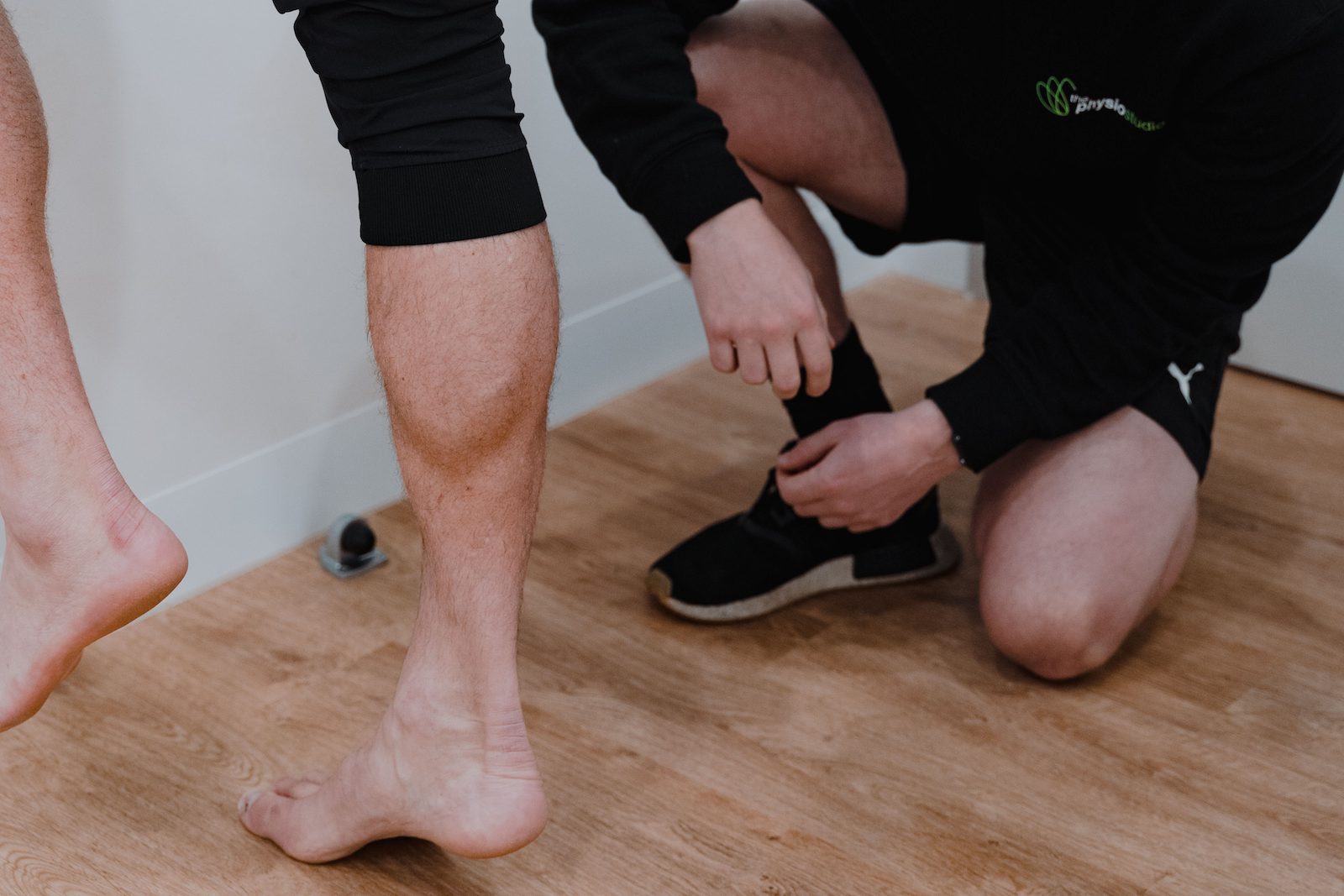
If you’re unsure whether to keep running, how much to load the tendon or which exercises suit your type of Achilles pain, the best first step is to see a physio. We can work out which type you have and where it sits on the tendinopathy continuum, measure your calf strength and build an individualised plan to keep you running, or get you back to it.
Frequently asked questions
Should I stretch my Achilles if it’s sore?
Usually not as a main treatment. Stretching doesn’t build tendon capacity, and for insertional Achilles pain it often makes symptoms worse. Strengthening is more effective.
Can I run a race with Achilles tendinopathy?
Sometimes. Many runners can race if their symptoms are stable and well within the pain rules, with a plan to manage the days afterwards. It is worth discussing with your physio well before race day.
Do I need a scan for Achilles pain?
Usually not. Achilles tendinopathy is generally diagnosed with a clinical assessment. An ultrasound or MRI may help if the diagnosis is unclear, a tear is suspected, or it isn’t improving with good rehab.
Will a heel lift help my Achilles pain?
A small heel lift can reduce the load on the tendon in the short term, particularly for insertional Achilles pain. It is a support while you rebuild strength, not a long-term fix.
Is it my calf or my Achilles?
Achilles pain is felt in the tendon just above the heel, while a calf strain is felt higher up in the muscle. See our guide to calf strains if your pain is in the muscle.
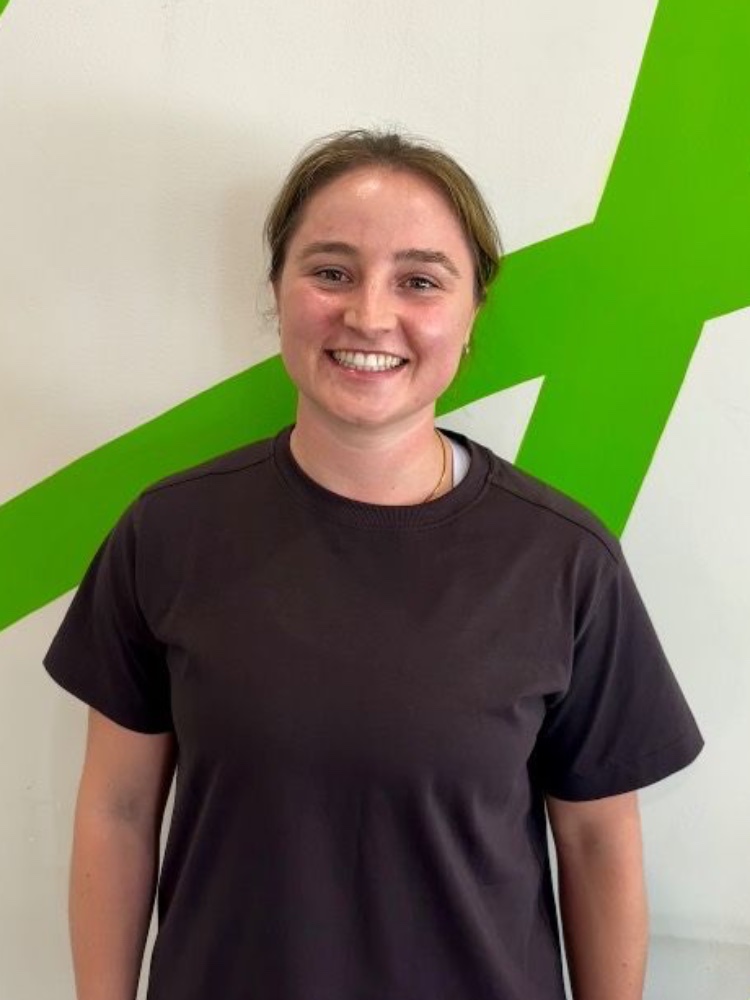
Chloe Wedd, Physiotherapist
Chloe is a physiotherapist at The Physio Studio with a special interest in running, cycling and swimming injuries. A keen runner and triathlete, she is a member of Run As One and is currently training for Ironman 70.3 Geelong, so she understands first-hand what it takes to keep training consistently while managing a niggle.
This article is general information and not a substitute for individual advice. Published 25 November 2026. Clinically reviewed November 2026 by the physiotherapy team at The Physio Studio.
More for runners: Running injuries · Running assessments · Sports physiotherapy